
Interior Odor
How to Get Smoke Smell Out of a Car (Step by Step)
Why cigarette smell survives air fresheners, how to clean it out of the headliner, seats, and vents yourself, and when a car needs professional odor removal.

Short answer: smoke smell doesn't live in the air — it lives in a sticky residue that coats every surface in the car: the headliner, seats, carpet, dashboard, glass, and the vents. To get rid of it, you have to clean that residue off everything and replace the cabin air filter. Air fresheners and odor sprays only cover it up for a few days.
Want a pro to handle it?
Smoke Odor Treatment at your home or office in Dallas, TX — complete visit from $299.
Maybe you just bought a used car that smelled fine on the lot and now smells like an ashtray on a hot afternoon. Or you've quit smoking and want the car to stop reminding you. Either way, the fix is the same — and it's more about where you clean than what you spray.
Why smoke smell is so hard to get out of a car
Cigarette smoke leaves behind a film of tar, nicotine, and fine particles. That film is what you smell, and a car is the worst possible place for it:
- It's a small, closed space. Every cigarette smoked inside deposits residue on the same few square feet of material, trip after trip.
- Soft materials soak it up. Cloth seats, carpet, and especially the headliner are porous. The residue works into the fibers and the foam behind them.
- Hard surfaces hold a film. The dashboard, door panels, and the inside of the glass get a sticky yellow-brown coating you often can't see until you wipe it.
- The HVAC system recirculates it. Residue collects in the cabin air filter and ducts, so every time the fan runs, the smell comes back.
- Heat brings it back out. A car parked in the Texas sun gets hot enough to release odor that seemed gone on a cool morning. That's why a used car can smell fine at the dealership and terrible a week later.
This is why air fresheners fail. They add a scent on top, but the source is still there, and it outlasts the freshener every time.
How bad is it? A quick check
Before you plan your weekend, figure out what you're dealing with.
- The white towel test. Wipe the inside of the windshield with a clean white microfiber towel. A yellow or brown smear means residue is coating every hard surface in the car, not just the glass.
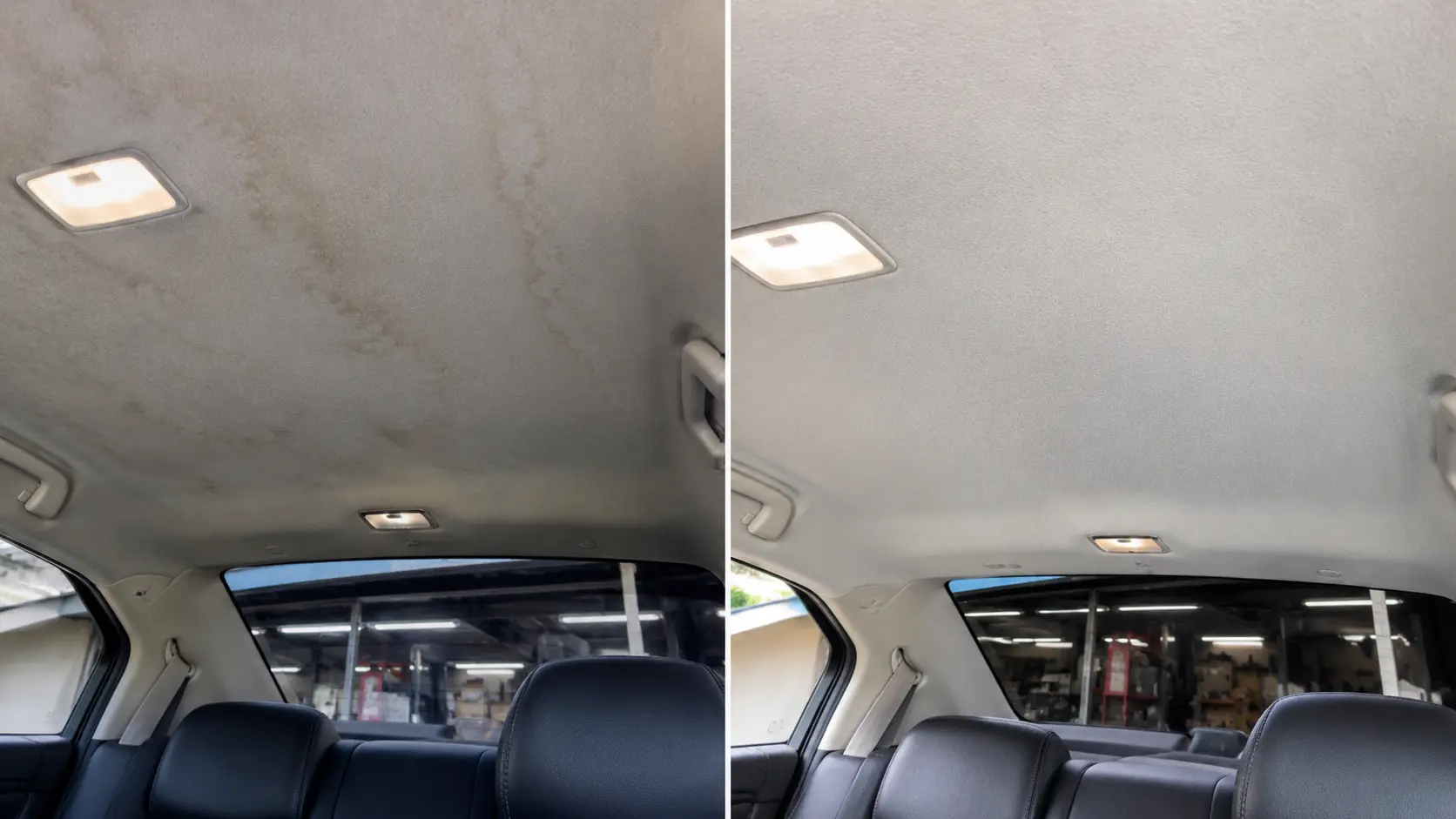
- Look up. A yellowed or brown-tinted headliner — especially above the driver's seat — means years of smoking. It's also the hardest area to clean yourself.
- Close it up in the sun. Leave the car shut for an hour on a warm day, then open the door. Heat shows you the real level of the smell.
- Turn on the fan. If the smell gets stronger with the AC or heat on, the HVAC system is part of the problem.
Roughly, it falls into three levels:
| Level | What you notice | Realistic outcome |
|---|---|---|
| Light | Faint smell mostly after the car has been closed up; limited to a few areas | Usually fixable with a thorough DIY clean |
| Moderate | Smell hits as soon as you open the door and stays after airing out | Possible yourself with a full weekend and patience; often faster with a pro |
| Heavy | Smoked in daily for years; yellow headliner; smell throughout the cabin | Needs every surface cleaned plus ozone; big improvement, but a faint trace can remain |
What you'll need
| Item | What it's for |
|---|---|
| A stack of microfiber towels (10+) | Residue transfers to the towel — swap to a clean one often |
| Interior all-purpose cleaner | Dashboard, door panels, console, seat belts |
| Glass cleaner | Inside of every window, windshield, and mirror |
| Upholstery cleaner and a soft brush | Cloth seats and carpet |
| Wet/dry vac or rented carpet extractor | Pulling dirty cleaner back out of the fabric |
| Baking soda | Dry deodorizing for carpet and cloth seats |
| New cabin air filter | The part almost everyone forgets |
| Activated charcoal bags | Absorbing what's left after cleaning |
Step-by-step: how to remove smoke smell from a car
Work top to bottom, so residue you knock loose falls onto surfaces you haven't cleaned yet.
1. Take out the source
Empty the ashtray and remove it if it comes out. Pull out the floor mats, then look under the seats and along the seat rails — old cigarette butts and ash hide there and keep the smell going no matter what else you do. Throw away anything that can't be washed.
2. Clean the headliner — gently
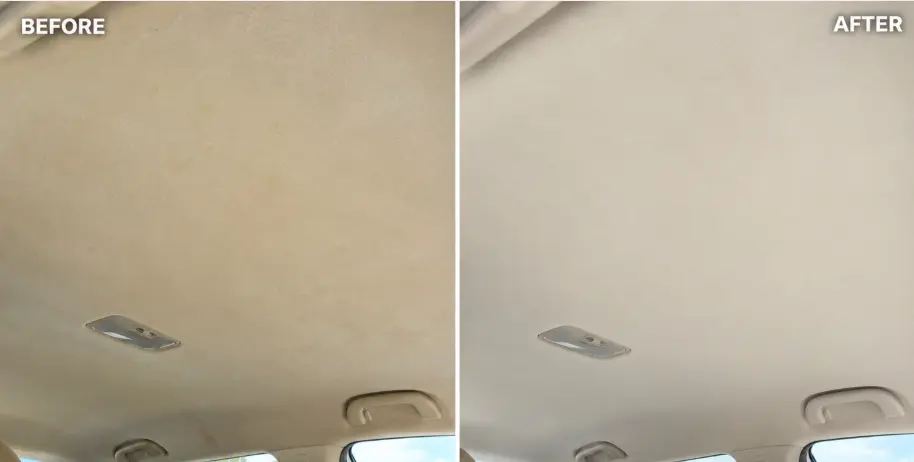
The headliner holds more smoke than anything else, and it's also the easiest part to ruin. The fabric is glued to a foam backing, and soaking it can loosen the glue and make it sag.
- Never spray cleaner directly on the headliner. Spray it onto a microfiber towel instead.
- Blot and wipe lightly in one direction. Don't scrub.
- Switch to a clean side of the towel constantly. A smoker's headliner will turn towels yellow fast.
If the headliner is badly yellowed, this is the step where many owners decide to hand the car to a professional.
3. Wipe down every hard surface
Dashboard, steering wheel, door panels, console, cup holders, air vent louvers, sun visors, and the plastic trim around the doors. Use the interior cleaner and a clean towel, then go over everything a second time. The first pass usually just moves the film around.
Don't skip the seat belts. Pull each one all the way out, clamp it so it can't retract, and clean the webbing. Belts absorb smoke and are handled every drive. Let them dry completely before you let them roll back in.
4. Clean all the glass — twice
The smoke film on the inside of the windows smells and makes the glass look hazy at night. Clean every window, the windshield, and the mirrors, then do it again with fresh towels.
5. Deep clean the seats and carpet
Vacuum thoroughly first. Then work upholstery cleaner into the cloth seats and carpet with a soft brush and pull it back out with a wet/dry vac or an extractor. Extraction matters: scrubbing without extracting just spreads the residue around in the fabric.
Leather seats are easier — wipe them with a leather cleaner and condition them afterward.
Once the fabric is completely dry, sprinkle baking soda on the carpet and cloth seats, leave it overnight, and vacuum it up.
6. Replace the cabin air filter
This is the step that makes the biggest difference for the least effort. On most cars the filter sits behind the glove box and takes a few minutes to swap — check your owner's manual. After the new filter is in, run the fan on high with the windows down for 10–15 minutes.
7. Let it air out, then absorb what's left
Park the car in the sun with the windows cracked for a day to help everything dry and release trapped odor. Then leave a couple of activated charcoal bags inside for a week or two to soak up what remains.
What doesn't work
- Air fresheners, sprays, and scented vent clips. They cover the smell for a few days, then you get smoke plus pine tree.
- "Odor bombs" or foggers on their own. Set off in a dirty car, they mask the smell temporarily. They can help as a final step after cleaning — not instead of it.
- Leaving the windows open for weeks. Fresh air helps a bit, but the residue is still on every surface.
- Soaking the seats or headliner. Too much water can leave fabric damp and musty in a closed car and can make a headliner sag.
What about ozone?
Ozone generators come up in every search about smoke smell, and they do work — but with two big conditions.
- Only after cleaning. Ozone neutralizes odor molecules in the air and on surfaces. It can't remove the residue itself, so on a dirty interior the smell comes back.
- Safety matters. Ozone irritates the lungs. No people or pets should be in the car while it runs. Afterward, open the doors or windows and let the parked car air out for several hours before anyone gets in and drives it. Repeated, heavy treatments can also be hard on rubber and some interior materials.
If you're buying a generator for a one-time job, it's often simpler to have it run as part of a professional clean.
Buying a used car that smells like smoke?
Smoke smell is one of the most common complaints about used cars, and sellers know how to hide it for a test drive. Before you buy:
- Check the headliner for yellow or brown tint, especially above the driver's seat.
- Look for burn marks on the seats, carpet, and door panels, and for a well-used ashtray or lighter socket.
- Smell with the fan on, and ask to see the car after it has been sitting in the sun.
- Notice heavy air freshener. A strong new-car or vanilla scent can be hiding something.
If you still want the car, use the smell in negotiation. A professional smoke odor removal in Dallas starts around $300, and that's a fair number to take off the price.
How long it really takes
- Light smell: an afternoon for the cleaning, plus a day of airing out.
- Moderate smell: a full weekend, sometimes with a second round of hard-surface cleaning.
- Heavy, long-term smoking: a full weekend or more, plus ozone — and realistic expectations. Most of the smell can be removed; a faint trace can remain in deep foam and hard-to-reach areas.
DIY vs. professional smoke odor removal
| Do it yourself | Professional treatment | |
|---|---|---|
| Cost | Cleaners, towels, filter, maybe an extractor rental | From $299 complete (interior detail + smoke treatment) |
| Time | An afternoon to a full weekend | 1–2 hours added to an interior detail, while you're at home or work |
| Headliner | Risky — easy to over-wet and cause sagging | Low-moisture methods made for headliners |
| Ozone | Buy or rent a generator and handle safety yourself | Added after cleaning for +$50 if needed |
| Best for | Light or recent smell | Moderate to heavy smell, yellow headliners, selling or just-bought cars |
When it's worth calling a detailer
Do it yourself if the smell is light and you have a weekend. Call a professional when:
- The headliner is yellow or brown
- The car was smoked in daily for years
- You tried cleaning and the smell came back on the first hot day
- You're selling the car or just bought one that smells
That's exactly what our Smoke Odor Treatment is for. We clean the residue out of the seats, carpet, headliner, hard surfaces, and accessible vent paths, then treat the soft surfaces with automotive deodorizers. It's +$100–$175 on top of an Interior Deep Detail, so a complete appointment starts at $299. If odor lingers after cleaning, Ozone Treatment is an optional +$50, and yellowed ceilings can get extra attention with headliner cleaning.
We're mobile — we come to your driveway or office parking lot in Dallas, Plano, Frisco, Richardson, Carrollton, Addison, Coppell, and Las Colinas. We check how strong the smell is before we start and confirm the price with you first.
Questions
Frequently asked questions
How long does it take to get smoke smell out of a car?
A car with light, recent smoke smell can usually be fixed in a weekend of thorough cleaning. A car that was smoked in daily for years takes a full top-to-bottom clean of every surface, a new cabin air filter, and often ozone afterward — and even then a faint trace can remain in deep materials.
Does baking soda remove smoke smell from a car?
It helps a little. Sprinkled on dry carpet and cloth seats, left overnight, and vacuumed up, baking soda absorbs some odor from the fabric surface. It does nothing for the residue on the headliner, hard surfaces, glass, and vents, which is where most of the smell comes from.
Will ozone get rid of cigarette smell in a car?
Ozone can neutralize lingering odor, but only after the residue has been cleaned out. Run it on a dirty interior and the smell comes back. Nobody should be in the car during treatment, and the car should air out with the doors or windows open for several hours before anyone drives it.
Why does my car smell like smoke when I turn on the AC?
Smoke residue builds up in the cabin air filter and the HVAC system, and every time the fan runs it pushes that smell back into the cabin. Replace the cabin air filter and clean the vents after the rest of the interior is done.
Does smoke smell lower a car's resale value?
It can make a car harder to sell. Buyers notice smoke smell and yellowed headliners right away, and it gives them a reason to negotiate. Removing the smell before you list the car usually costs less than the discount buyers ask for.
How much does professional smoke odor removal cost in Dallas?
At Häus Detailing, Smoke Odor Treatment is a +$100–$175 add-on to an Interior Deep Detail, so a complete appointment starts at $299. Ozone Treatment is an optional +$50 after cleaning. We come to you in Dallas and nearby suburbs and confirm the price before we start.